
 Español
 Portugues
 Pусский
 Français
 Deutsch
 日本語
日本語 한국어
한국어 العربية
 Italiano
 Nederlands
 Svenska
 Polski
 ไทย
ไทย Türk dili
 Indonesia
 Tiếng Việt
 čeština
 Română
 Suomalainen

When an infusion pump has to work smoothly, quietly, and consistently, the small mechanical parts inside the system matter just as much as the motor, control board, or battery. At Dongguan Jifan Precision Machinery Co., Ltd., I focus on these kinds of precision components. One of our customized solutions is the Custom Crankshaft for Battery-Powered Infusion Pumps, developed according to the customer's drawings, equipment structure, motion requirements, and production needs.
I know that a crankshaft may look like a simple metal shaft at first glance. In practice, it can be a key part of a motion system. Its job is to turn rotary movement into controlled mechanical movement, depending on the pump structure. Small differences in shaft diameter, crank position, concentricity, surface condition, or connecting geometry can affect how the complete mechanism runs.
My approach is straightforward: understand the working mechanism first, then manufacture the part around the actual application. We provide custom crankshaft machining, CNC machining, dimensional inspection, and final verification for customers who need precision components for infusion pump systems and other compact automated equipment.
1. Why a Custom Crankshaft Matters in a Battery-Powered Infusion Pump
An infusion pump is designed to deliver fluids in a controlled way. According to the U.S. Food and Drug Administration (FDA), infusion pumps can deliver fluids such as nutrients and medications at programmed rates or intervals. Different pump designs use different mechanical principles, including syringe mechanisms, peristaltic mechanisms, and other electromechanical arrangements. Portable or ambulatory infusion pumps are also designed for use away from a fixed bedside position.
That operating environment creates a practical challenge. A battery-powered pump normally has limited space, limited energy, and a strong need for stable mechanical movement. The mechanical transmission system therefore needs to work efficiently within a compact housing.
This is where a custom crankshaft can become useful. Rather than forcing a standard shaft into a mechanism that was not designed around it, I manufacture the crankshaft according to the customer's actual equipment. The shaft can be designed around the required center distance, crank geometry, mounting position, shaft diameter, connection method, and other mechanical details.
For example, if a motor rotates continuously but the pump mechanism needs a repeated reciprocating movement, a crankshaft and connecting mechanism can convert the motor's rotary motion into the required movement. The exact arrangement depends on the pump architecture. I do not assume that every infusion pump uses the same structure; instead, I work from drawings, samples, technical specifications, or equipment requirements provided by the customer.
This is especially important for a Battery-Powered Infusion Pump Crankshaft. Portable medical equipment often has a compact internal layout, so there may be very little room to correct a mechanical interference problem after production. Getting the geometry right before machining can save considerable time during assembly and testing.
The goal is not simply to produce a shaft that fits into a hole. The goal is to produce a precision mechanical component that works correctly with the motor, bearing, connecting rod, pump mechanism, and housing of the customer's equipment.
| Pump Type | Basic Working Principle | Typical Mechanical Movement | Relevance to Custom Mechanical Parts |
|---|---|---|---|
| Syringe Pump | A movable piston controls fluid delivery from a syringe. | Linear piston movement | Precision drive components may be required to convert motor movement into controlled linear motion. |
| Peristaltic Pump | Rollers compress flexible tubing and move fluid forward. | Rotary roller movement | Rotating shafts and transmission components may be used depending on the equipment design. |
| Elastomeric Pump | Pressure from an elastic reservoir pushes fluid forward. | Pressure-driven fluid movement | The mechanical transmission requirement may differ significantly from motor-driven pump designs. |
| Multi-Channel Pump | Multiple fluid channels can operate at controlled rates. | Depends on internal pump architecture | Customized transmission components may be required for compact multi-channel mechanisms. |
Source: U.S. FDA, What Is an Infusion Pump? and Infusion Pumps. :contentReference[oaicite:0]{index=0}
2. How a Custom Crankshaft Works Inside the Mechanical System
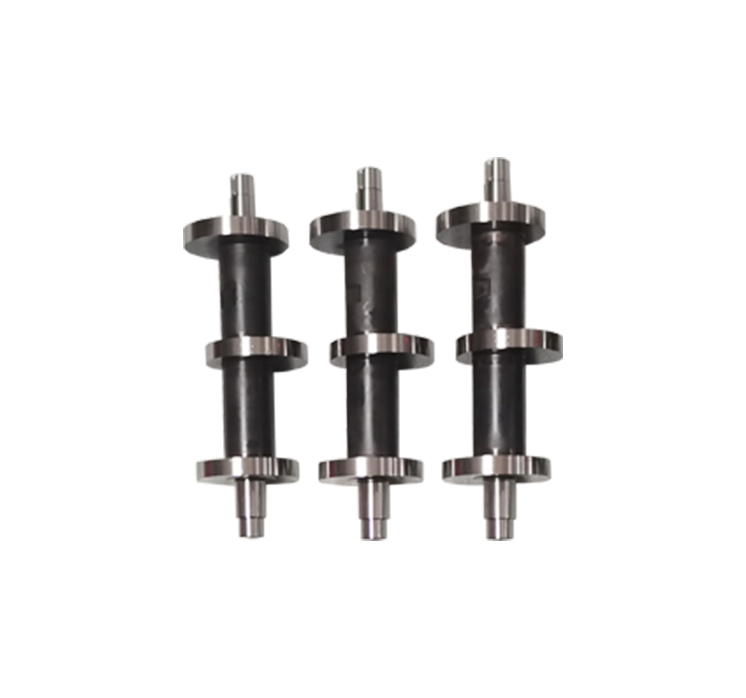
When I explain a crankshaft to a new customer, I usually keep it simple. A crankshaft is a rotating component with one or more offset sections. These offsets allow rotary motion to be transferred into another type of movement.
Imagine a small electric motor turning a shaft. The motor naturally provides rotary motion. If the pump mechanism needs a repeated push-and-pull action, the crank section can work together with a connecting rod or another transmission component. As the crankshaft rotates, the offset point moves through a circular path. The connected component then follows that movement.
The actual movement pattern depends on the crank geometry and the parts connected to it. This is why I pay close attention to the crank throw, shaft centerline, mounting surfaces, and connection points during the design and machining stage.
In a compact battery-powered system, smooth movement is particularly useful. A poorly matched crankshaft can create unwanted vibration, friction, noise, or uneven movement. These problems may not come from the crankshaft alone, of course. Motor selection, bearing condition, assembly accuracy, lubrication, software control, and the rest of the mechanism also matter. Still, the crankshaft must be manufactured consistently enough to support the overall design.
My role as a precision component manufacturer is therefore focused on the mechanical part itself. I use the customer's technical information to control the dimensions and geometry required for the application. If the customer provides a drawing, I follow the specified dimensions and tolerances. If the project requires engineering discussion before production, I can review the mechanical structure and machining requirements with the customer.
For buyers searching for a precision crankshaft for infusion pumps, this is one of the most important points to consider. A custom component should be made around the real mechanism, rather than selected only by its outside appearance or general size.
Typical Motion Chain
A simplified motion chain can look like this:
Battery → Motor → Transmission → Custom Crankshaft → Connecting Mechanism → Pump Actuation → Controlled Fluid Movement
Not every pump follows exactly this configuration. Some pumps use different drive systems. The diagram above simply explains one common type of mechanical relationship in which a crankshaft can play a role.
The FDA also notes that infusion pump performance problems can involve several different areas, including software, user interface design, damaged mechanical parts, and battery failures. That is a good reminder that reliable pump operation is a system-level issue rather than something that can be attributed to one component alone. :contentReference[oaicite:1]{index=1}
3. Main Features of Our Custom Crankshaft for Battery-Powered Infusion Pumps
I do not treat every crankshaft order as the same product. The customer may have a completely different mechanical layout from the previous project. That is why customization is an important part of our manufacturing process.
Made to Drawing and Equipment Requirements
Customers can provide 2D drawings, 3D models, samples, dimensions, or other technical information. I use the available information to understand the required shaft geometry and machining operations. Where the application is still under development, the customer can also discuss the intended movement and installation conditions with us before production.
Controlled Shaft Geometry
A crankshaft can contain several important geometric relationships. These may include shaft diameters, shoulders, keyways, threaded sections, bearing seats, crank offsets, and connecting points. Each feature needs to match the corresponding component in the assembly.
Precision Machining
Our machining work focuses on producing the required dimensions and profiles according to the agreed technical specifications. Depending on the part design, the manufacturing process may involve turning, milling, drilling, grinding, and other machining operations.
Inspection Before Delivery
We do not consider a part finished simply because the machining operation is complete. Before delivery, products go through dimensional inspection, quality checking, and final verification against the agreed specifications. The inspection items depend on the actual product and customer requirements.
Suitable for Small and Customized Components
Our experience covers custom Cams, Cam Mechanisms, eccentric shafts, crankshafts, plate cams, conjugate cams, and other precision components. This makes crankshaft projects a natural extension of our Machining Capabilities, particularly where the component is part of a compact automated mechanism.
| Item | Why It Matters | How We Handle It |
|---|---|---|
| Overall Dimensions | The part must fit within the equipment's available space. | Machined according to drawing or agreed specifications. |
| Shaft Diameter | Must match bearings, couplings, gears, or other mating parts. | Dimensional control and inspection. |
| Crank Offset | Influences the motion produced by the crank mechanism. | Manufactured according to the specified geometry. |
| Surface Requirements | Can affect contact, friction, assembly, and service life. | Machining or finishing process selected according to specification. |
| Material | Influences strength, machinability, wear behavior, and application suitability. | Selected according to customer drawing and project requirements. |
| Quantity | Affects production planning and delivery schedule. | Production arranged according to order quantity and project conditions. |
4. Manufacturing Process: From Drawing to Finished Crankshaft
A good custom crankshaft starts long before the cutting tool touches the material. In my experience, many machining problems can be prevented by carefully checking the drawing and application requirements at the beginning.
Step 1: Technical Review
First, I review the customer's drawings, specifications, quantity, material requirements, and equipment application. For a crankshaft used in a battery-powered infusion pump, I also want to understand how the shaft is installed and what other parts it connects to.
If a drawing contains several critical dimensions, I pay attention to their relationship rather than looking at each number separately. For example, a shaft diameter may be correct on its own but still cause assembly trouble if the related shoulder position is wrong.
Step 2: Material and Process Planning
The material is selected according to the customer's specifications and the mechanical requirements of the project. Different materials behave differently during machining. Hardness, machinability, strength, and surface requirements all influence process planning.
Step 3: CNC Machining
Depending on the design, machining may include CNC turning, milling, drilling, and other precision operations. The exact route depends on the crankshaft structure. A simple shaft and a multi-feature crankshaft obviously should not be manufactured using the same process plan.
For complex geometry, process order matters. We need to maintain suitable reference surfaces while machining the different sections of the part. This helps reduce the risk of accumulated dimensional errors.
Step 4: Grinding and Surface Finishing
Some applications require grinding after machining. Grinding can be used to achieve specified surface and dimensional requirements on suitable features. Our broader manufacturing capabilities include Profile Grinding and irregular cam grinding, which also gives us experience with precision profiles and non-standard mechanical components.
Step 5: Dimensional Inspection
After machining, the finished component is inspected according to the agreed specifications. Depending on the drawing, inspection may cover shaft dimensions, critical distances, hole positions, crank geometry, surface requirements, and other defined characteristics.
Step 6: Final Verification and Packing
Before shipment, we perform final quality checking and verification. Protective packaging is used to reduce the chance of damage during handling and transportation. If the customer has special packaging requirements, we can discuss customized packaging arrangements.
This process may sound basic, but consistency comes from doing the basic steps carefully. For a precision component used inside a compact mechanical system, that matters.
| Stage | Main Focus | Customer Benefit |
|---|---|---|
| Drawing Review | Dimensions, tolerances, materials, interfaces | Reduces misunderstandings before production |
| Process Planning | Machining sequence and reference surfaces | Supports consistent manufacturing |
| Precision Machining | Required geometry and dimensions | Produces the specified custom component |
| Inspection | Dimensional and quality verification | Confirms the finished part against agreed requirements |
| Final Verification | Product condition and order requirements | Provides a final check before shipment |
| Protective Packaging | Protection during transportation | Helps reduce handling and shipping damage |
Source: Manufacturing workflow and inspection practices described above are based on Dongguan Jifan Precision Machinery Co., Ltd.'s stated custom machining process and supplied project requirements; regulatory quality-system context for medical-device supply chains is described by ISO 13485:2016. :contentReference[oaicite:2]{index=2}
5. Technical Advantages of a Custom Infusion Pump Crankshaft
When I talk with customers about a custom infusion pump crankshaft, I focus less on marketing words and more on what the part needs to do inside the machine.
1. Better Mechanical Matching
A custom crankshaft is produced around the actual equipment design. This can make it easier to match the shaft with bearings, connecting rods, gears, couplings, and other components.
2. Compact Mechanical Design
Battery-powered equipment often needs to make good use of limited internal space. A customized shaft can be designed around the available installation area instead of requiring the machine designer to change the entire structure to accommodate an off-the-shelf component.
3. Consistent Motion Transfer
The crank geometry determines how rotary movement is transferred to the next component. When the geometry is manufactured according to the required design, the crankshaft can provide the intended mechanical movement within the complete system.
4. Easier Product Development
Medical equipment manufacturers may develop different pump models for different applications. The internal drive system can also change from one model to another. A custom machining supplier can support these changes without requiring the customer to use one fixed shaft design for every project.
5. Suitable for OEM and Project-Based Manufacturing
We support custom components based on drawings and project requirements. This is useful for OEM manufacturers, equipment developers, automation companies, and engineering teams that need a specific mechanical component rather than a general-purpose replacement part.
It is worth making one point clear: a crankshaft itself does not make an infusion pump medically safe or compliant. The finished medical device must be evaluated as a complete system by its responsible manufacturer. The FDA has reported that infusion pump performance problems can have multiple causes, including mechanical parts, software, interface design, and battery-related issues. :contentReference[oaicite:3]{index=3}
From my side, I focus on what I can control: the accuracy of the manufactured component, consistency with the drawing, appropriate inspection, reliable communication, and traceable project requirements.
6. Applications and Industries for Custom Crankshaft Components
The main application discussed on this page is battery-powered infusion pump equipment. However, the manufacturing technology behind a custom crankshaft is not limited to one machine type.
Our precision mechanical components are also used in automated machinery and production equipment across daily chemical, biopharmaceutical, food processing, electronics, plastics and hardware, printing, beverage, and other industries.
In these applications, the component may have a different function. A crankshaft may be part of a reciprocating mechanism, an actuator, a compact transmission system, or another motion-control assembly. The common requirement is that the part must match the machine design.
Medical and Biopharmaceutical Equipment
For medical and biopharmaceutical equipment manufacturers, compact mechanical components can be part of automated fluid-handling or dosing systems. When the customer provides a defined drawing and application specification, we manufacture the component accordingly.
Automation Equipment
Automation systems often use mechanical parts to convert motor rotation into repeated movement. This is one of the areas where crankshafts, eccentric shafts, cams, and other motion components can work together.
Food and Beverage Machinery
Packaging and processing equipment may contain repeated mechanical movements. Custom shafts and cams can be used where standard components do not provide the required geometry.
Printing Machinery
Printing equipment often requires coordinated movement between multiple mechanical components. Precision shafts, cams, and related parts can support these motion systems when manufactured to the correct dimensions.
Electronics and Hardware Equipment
Compact production machines frequently need small custom mechanical components. When installation space is limited, a made-to-drawing shaft can be more practical than trying to modify a standard component.
In short, I see the Custom Crankshaft for Battery-Powered Infusion Pumps as one example of a much wider custom machining capability. The same attention to geometry, material, tolerance, inspection, and application can be applied to many other precision mechanical parts.
7. Why I Recommend Working With a Custom Precision Machining Manufacturer
Choosing a supplier for a small mechanical component can be harder than it looks. The part may be physically small, but the consequences of a dimensional mistake can be much bigger when it is installed inside a complete machine.
At Dongguan Jifan Precision Machinery Co., Ltd., we specialize in cam mechanisms, Custom Cam Machining, cam design, profile grinding, eccentric shafts, crankshafts, plate cams, conjugate cams, and other Custom Precision Parts. This background is useful because many motion systems do not contain just one type of component. A machine may use a crankshaft together with cams, shafts, gears, bearings, or other transmission parts.
We Work From the Customer's Actual Requirements
I do not believe that one standard component can solve every mechanical problem. Customers can send drawings, specifications, samples, or equipment information. We then review the requirements and determine the appropriate manufacturing approach.
We Focus on Precision Components
Our business is centered on precision mechanical manufacturing rather than general trading. That allows us to focus on machining details, production processes, dimensional inspection, and the practical requirements of custom parts.
We Support Different Customization Levels
Some customers already have a complete engineering drawing. Others may have a sample or an existing part that needs to be reproduced or modified. The amount of engineering input depends on the project. We can work with the information available and clarify the remaining requirements before production.
We Understand Motion Mechanisms
Our product range includes cams, eccentric shafts, crankshafts, and other motion-related components. This gives us practical experience with parts that need to work together as a mechanism rather than as isolated pieces of metal.
We Check Before Shipping
Production is followed by dimensional inspection, quality checking, and final verification according to the agreed specifications. The exact inspection requirements depend on the customer's drawing and project.
For customers in the medical-device supply chain, quality management is an especially important subject. ISO 13485:2016 is an international standard covering quality management systems for organizations involved in the design and manufacture of medical devices and related services. It emphasizes consistent processes, regulatory requirements, and risk management. :contentReference[oaicite:4]{index=4}
I do not use a standard or certification claim for a product unless it has actually been established for that specific project or organization. Instead, I recommend that customers clearly define their required quality documents, inspection records, material documentation, traceability, and other compliance needs before placing an order.
8. FAQ About Custom Crankshaft for Battery-Powered Infusion Pumps
Q1: Can you manufacture a crankshaft according to our drawing?
Yes. We provide custom crankshaft machining based on customer drawings, specifications, samples, and equipment requirements. If you have a 2D drawing or 3D model, we can review the dimensions, material, tolerances, quantity, and other production requirements before quotation.
Q2: Can you make a custom crankshaft for a small battery-powered infusion pump?
Yes, subject to technical review. We manufacture customized precision shafts and crankshafts for compact mechanical systems. The actual feasibility depends on the required dimensions, material, tolerance, geometry, production quantity, and machining requirements.
Q3: What information should I provide for a custom infusion pump crankshaft?
The most useful information includes the drawing or 3D model, material specification, critical dimensions, tolerance requirements, quantity, surface requirements, shaft connection details, and application information. If the drawing is not complete, a sample or photos with key measurements can also help us understand the project.
Q4: Can you recommend the material for our crankshaft?
We can discuss material options based on the application and machining requirements. However, for a medical equipment component, the final material selection should be confirmed by the customer's engineering and regulatory team according to the complete device design and applicable requirements.
Q5: What machining processes can be used?
Depending on the design, we may use CNC turning, milling, drilling, grinding, and other suitable machining processes. The exact process route is determined by the crankshaft geometry, material, tolerance, surface requirements, quantity, and production conditions.
Q6: How do you check the finished crankshaft?
We perform dimensional inspection, quality checking, and final verification according to the agreed specifications. The exact inspection items depend on the customer's drawing and project requirements. Critical dimensions should be identified clearly during the quotation and technical review stage.
Q7: Can you provide samples before mass production?
Sample production can be discussed according to the project. For a new custom crankshaft, a sample or prototype stage can be useful when the customer needs to verify fit, assembly, or mechanical performance before placing a larger order.
Q8: What is the production lead time?
The production cycle depends on product complexity, material, quantity, machining requirements, and customization level. After reviewing the drawing and order details, we can confirm the production schedule according to the specific project.
Q9: How do you package precision crankshafts?
We use protective packaging designed to reduce the risk of damage during handling and transportation. Customized packaging can also be discussed for special requirements, larger quantities, or projects with specific packing instructions.
Q10: How can I request a quotation?
Send us your crankshaft drawing, 3D model, sample information, required quantity, material, tolerance, surface requirements, and any other technical specifications you already have. The more complete the information is, the easier it is for us to evaluate the machining process and provide a practical quotation.
Conclusion: A Small Component With a Real Mechanical Job
A crankshaft may be only one small component inside a battery-powered infusion pump, but its geometry can have a direct relationship with the movement of the mechanical system. That is why I prefer to approach this type of project from the engineering side rather than simply treating it as a standard machined shaft.
Our Custom Crankshaft for Battery-Powered Infusion Pumps is manufactured according to customer drawings, specifications, and equipment requirements. We can support custom crankshaft machining, CNC machining, profile-related precision work, dimensional inspection, and final verification.
If you are developing a portable infusion pump, medical dosing mechanism, compact automated device, or another small motion system, you can send us the drawing or existing part information. I can review the required geometry, machining process, material, quantity, and inspection requirements with you before production.
My goal is simple: make the mechanical component fit the machine it was designed for, keep the manufacturing process practical, and deliver a part that matches the agreed technical requirements.
Looking for a custom infusion pump crankshaft manufacturer? Contact Dongguan Jifan Precision Machinery Co., Ltd. with your drawing or project specifications to discuss your battery-powered infusion pump crankshaft, precision crankshaft machining, or other custom shaft machining requirements.
Technical Reference Notes
U.S. Food and Drug Administration (FDA): Infusion pumps are medical devices used to deliver fluids in controlled amounts, with different pump types using different operating principles. :contentReference[oaicite:5]{index=5}
U.S. FDA: Infusion pump performance problems can involve software, human factors, damaged mechanical parts, and battery failures, among other causes. :contentReference[oaicite:6]{index=6}
International Organization for Standardization (ISO): ISO 13485:2016 specifies quality management system requirements for organizations involved in medical devices and related services. :contentReference[oaicite:7]{index=7}
