
CNC Machining Services: Tolerance, Tooling, Toolpath and Machining Complexity

Tolerance, tooling, toolpath strategy and machining complexity are closely connected in CNC Machining Services. A component with tighter dimensional requirements, difficult-to-reach features, complex surfaces or demanding geometric relationships generally requires more careful process planning than a simple machined part. The machining challenge does not come from a single tolerance value. It comes from the interaction between part geometry, material, machine capability, workholding, cutting tools, toolpaths and inspection.
For engineers and purchasing teams, understanding these relationships can help avoid unnecessary machining complexity. A design may technically be manufacturable but still require additional setups, specialized tools, longer machining cycles or more inspection operations. In contrast, appropriate tolerance allocation and practical feature design can often simplify manufacturing while maintaining the required functional performance.
This article explains how tolerance requirements influence CNC machining processes, why tooling selection becomes more important as geometry becomes more demanding, how toolpath complexity affects machining time and dimensional stability, and how engineers can evaluate the relationship between tolerance, tooling and overall machining complexity.
Machining complexity is often associated with complicated shapes, but geometry alone does not determine manufacturing difficulty. Two components with similar overall dimensions may require very different machining processes because their tolerances, surface requirements, internal features and inspection requirements are different.
| Factor | Effect on CNC Machining | Potential Production Impact |
|---|---|---|
| Dimensional Tolerance | Requires tighter process control | More inspection and finishing operations |
| Geometric Tolerance | Requires controlled datum relationships | More complex setups and measurement |
| Tool Accessibility | Determines available cutter orientation | Additional tools or machine axes may be required |
| Surface Geometry | Influences toolpath strategy | Longer machining cycles |
| Material | Affects cutting force and tool wear | Different tooling and parameters |
| Inspection Requirements | Determine measurement methods | Additional inspection time and equipment |
pemVerify all parameters against current test reports and applicable standards before use in specifications.emp
The practical manufacturing challenge is therefore determined by the combined effect of these factors rather than by any single feature.
Tolerance defines the permitted variation around a specified dimension or geometric requirement. In CNC Machining Services, tolerance determines how closely the manufacturing process must control the final component.
A general dimension with a relatively broad tolerance may be achievable through standard machining conditions and conventional inspection. A tighter tolerance may require controlled tooling, stable workholding, additional finishing passes, temperature awareness and more frequent inspection.
One common design problem is assigning unnecessarily tight tolerances to features that do not have strict functional requirements. This can increase machining time and inspection requirements without improving the performance of the finished component.
Functional features such as bearing seats, locating holes, shaft diameters or mating surfaces may require tighter control, while non-functional external dimensions may not require the same level of precision.
The appropriate tolerance should be based on how a feature contributes to assembly, movement, sealing, positioning or load transfer.
When tolerances are defined according to actual functional requirements, the machining process can be optimized around the features that matter most.
Dimensional tolerance controls the allowable variation of a size, while geometric tolerance controls characteristics such as form, orientation or position.
A component can have acceptable individual dimensions but still fail to assemble correctly if the relationships between those features are not controlled.
For a hole pattern, the diameter of each hole may be within specification while the actual positions are shifted. If the holes are used to mount the component to another part, positional accuracy may be more important than hole diameter alone.
A surface can have the correct overall thickness but still exhibit excessive flatness variation. Similarly, two surfaces can have the correct individual dimensions while their parallel relationship is outside the required condition.
These examples demonstrate why machining complexity should be evaluated according to the complete drawing requirement rather than isolated dimensions.
Tighter tolerances can influence tool selection because the cutting tool must maintain stable geometry throughout the machining process. Tool diameter, rigidity, cutting edge condition, tool runout and tool overhang can all influence the final result.
Small-diameter tools can access narrow features but may have lower rigidity than larger tools. This can increase the risk of tool deflection and vibration, particularly during deep cutting.
When a tool must extend a significant distance from the holder to reach a deep cavity, rigidity decreases. Tool deflection can then affect dimensional accuracy and surface finish.
Tool runout means that the effective cutting position is not perfectly concentric with the intended spindle axis. Excessive runout can create uneven cutting load between cutting edges and influence surface quality and dimensional accuracy.
Toolpath strategy determines how the cutting tool moves through the material. It affects cutting load, tool engagement, machining time, surface quality and sometimes dimensional stability.
A simple pocket may require a relatively straightforward toolpath. A complex contoured surface may require multiple passes with controlled step-over, tool orientation and finishing strategies.
Roughing operations focus on removing material efficiently while maintaining a stable cutting load. A suitable roughing strategy can reduce the amount of material that the finishing tool must remove.
Semi-finishing can provide a more uniform machining allowance before the final finishing operation. This can be useful for complex surfaces and components where consistent finishing conditions are important.
Finishing operations determine much of the final surface condition and dimensional result. Toolpath direction, step-over, cutting parameters and tool condition can all affect the final surface.

Tool accessibility is one of the most important factors when evaluating whether a component can be machined efficiently.
A feature may be geometrically possible but difficult to reach with a rigid cutting tool. Deep cavities, narrow slots, internal corners and angled holes can require longer tools, specialized cutters or additional machine-axis positioning.
Deep cavities often require long-reach tools. Increasing tool length can reduce rigidity and increase vibration or deflection.
The internal corner radius is related to tool diameter. A very small internal radius may require a smaller cutter, which can increase machining time and reduce tool rigidity.
Angled holes and surfaces can require repositioning or multi-axis machining. The actual machining method depends on feature orientation, accessibility and required accuracy.
When a component cannot be completely machined from one setup, additional setups may be required. Each setup introduces another positioning operation and another opportunity for datum or alignment variation.
Additional setups can also increase fixture requirements, operator time and inspection complexity.
| Machining Condition | Typical Complexity | Main Consideration |
|---|---|---|
| Single Setup | Lower | Maintain stable workholding and tool access |
| Multiple Setups | Higher | Control datum transfer and repositioning |
| 3+2 Machining | Higher | Control indexed tool orientation and setup references |
| Simultaneous Multi-Axis | High | Coordinate tool orientation, surface geometry and machine motion |
pemVerify all parameters against current test reports and applicable standards before use in specifications.emp
Reducing unnecessary setups can simplify the process, but setup reduction should not be treated as an objective by itself. The final machining strategy should be selected according to geometry, tolerance, tool accessibility and inspection requirements.

CNC machining cost is influenced by material consumption, machine time, tooling, programming, workholding, inspection and post-processing. Machining complexity can affect several of these factors simultaneously.
Tighter tolerances may require additional finishing passes and inspection. Complex geometry may require longer programming and machining time. Difficult tool access may require specialized tooling or additional setups.
Therefore, reducing unnecessary complexity during design can sometimes provide greater cost benefits than simply negotiating the machining price after the design has been finalized.
Complex toolpaths, small step-over values, additional finishing passes and slow cutting conditions can increase cycle time.
Specialized cutters, long-reach tools, small-diameter tools or multiple tool types can increase tooling requirements.
Tight tolerances and complex geometric relationships may require additional measurement equipment and inspection time.
Design for manufacturability can help reduce unnecessary machining complexity while preserving functional performance.
Assign tighter tolerances only where functional requirements justify them. This allows general features to be produced using more efficient machining conditions.
Where possible, provide internal radii that can be machined with practical cutter sizes. Extremely small internal corners can require smaller tools and additional machining time.
Deep and narrow features should be reviewed from the perspective of tool accessibility. A feature that is difficult to access may require long-reach tooling or additional machining operations.
Where the component design allows, arranging features so that they can be accessed from fewer orientations can reduce setup requirements and simplify datum control.
Material properties influence cutting forces, tool wear, thermal behavior and surface finish. The same geometry can therefore require different machining strategies depending on the selected material.
Aluminum alloys may allow relatively high cutting speeds, while harder steels or other difficult-to-machine materials can require different tooling and cutting conditions.
Engineering teams should evaluate material selection together with tolerance and geometry instead of treating these factors independently.
Inspection is part of the manufacturing process, not simply an activity performed after machining. When a component contains tight tolerances or complex geometric relationships, the inspection strategy should be considered during process planning.
For simple external dimensions, precision hand measurement may be appropriate. More complex parts may require CMM inspection to evaluate datum relationships, hole positions, flatness, orientation or other geometric requirements.
| Requirement | Possible Inspection Approach | Planning Consideration |
|---|---|---|
| External Size | Micrometer or other precision instrument | Match instrument capability to tolerance |
| Hole Diameter | Bore gauge, plug gauge or suitable instrument | Consider hole size and tolerance |
| Thread | Thread gauge or dimensional measurement | Verify applicable thread requirements |
| Hole Position | CMM or suitable coordinate measurement | Establish correct datum system |
| Geometric Relationships | CMM or appropriate geometric inspection | Control reference surfaces and datums |
pemVerify all parameters against current test reports and applicable standards before use in specifications.emp
Applying tight tolerances to nearly every feature can increase process requirements without necessarily improving component function.
Very small slots, holes or internal radii may require small tools with lower rigidity and higher sensitivity to tool wear.
Deep cavities can force the use of long-reach tools. Increased tool overhang can lead to deflection and vibration.
A design that requires multiple orientations for features that could otherwise be accessed from fewer setups can increase datum-transfer risk and production time.
Complex freeform surfaces may require multi-axis toolpaths and longer machining cycles. If the surface geometry does not provide a functional advantage, a simpler geometry may be easier to manufacture.
| Engineering Item | Key Question |
|---|---|
| Functional Tolerance | Does each tight tolerance have a clear functional purpose? |
| GD&T | Are geometric relationships defined where they affect assembly? |
| Tool Access | Can standard or practical tools reach the required features? |
| Tool Rigidity | Will tool diameter and overhang provide sufficient stability? |
| Toolpath | Can roughing and finishing operations be planned efficiently? |
| Setups | Can unnecessary repositioning be avoided? |
| Fixture | Can the component be located and clamped repeatably? |
| Inspection | Can all critical characteristics be measured reliably? |
| Production | Can the machining process remain stable during repeat production? |
pemVerify all parameters against current test reports and applicable standards before use in specifications.emp
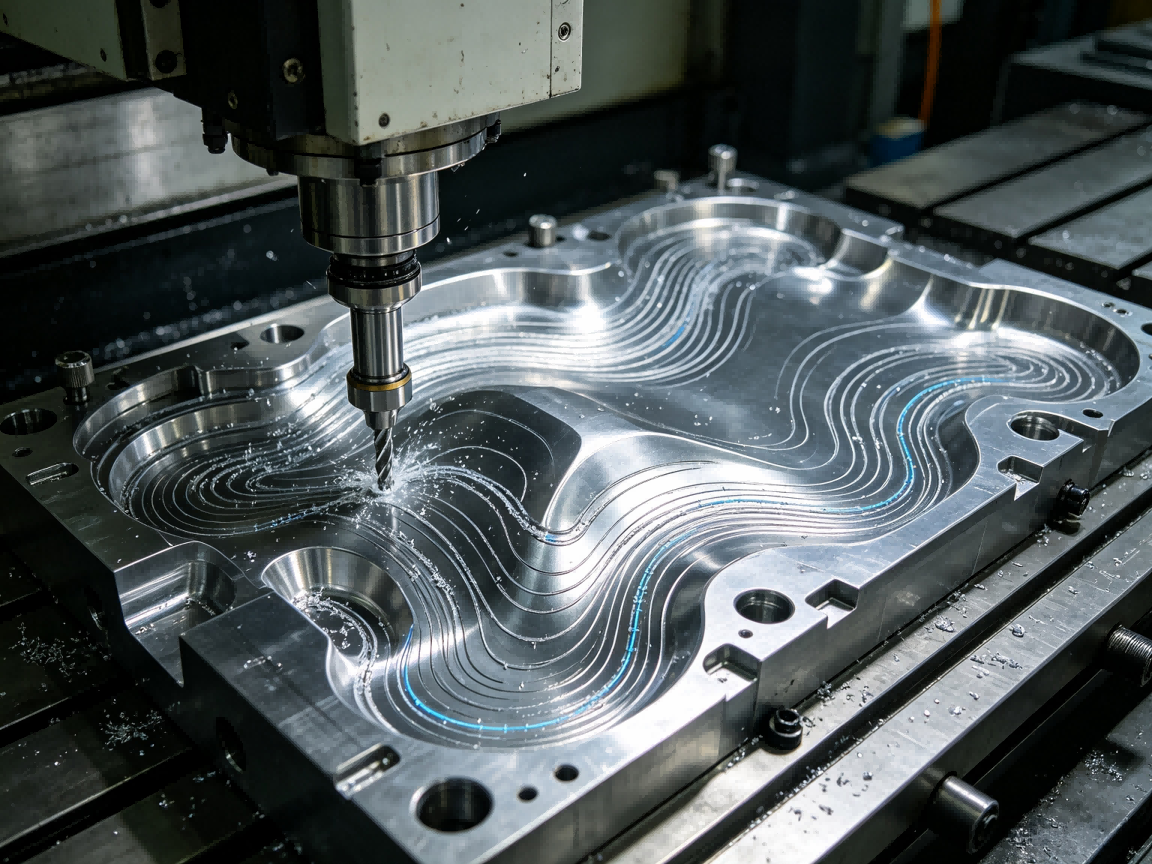
When selecting CNC Machining Services for a complex component, purchasing teams should evaluate more than the supplier's equipment list. A capable supplier should be able to interpret drawings, identify machining challenges, select appropriate tooling, develop practical toolpaths and establish a suitable inspection process.
The supplier should also be able to explain how tight tolerances, tool accessibility, workholding, multi-setup machining and inspection requirements will be controlled during production.
Dongguan city Jifan Precision Machinery Co., Ltd provides CNC machining services supported by an actual manufacturing facility, automated production lines, R&D prototyping and customized Machining Capabilities. The company supports machining requirements for automotive, textile and packaging machinery, non-standard automation equipment and construction machinery applications according to customer drawings and applicable specifications.
Not necessarily, but tighter tolerances generally require greater process control. The actual impact depends on the material, geometry, tolerance level, machine process, tooling and inspection requirements.
Tool diameter, rigidity, overhang, runout, cutting-edge condition and suitability for the material can all influence dimensional accuracy and surface quality.
Complex surfaces may require smaller step-over values, more finishing passes, multiple tool orientations and slower cutting conditions, all of which can increase machining time.
Reducing unnecessary setups can reduce repositioning and datum-transfer opportunities, but the final process should still be selected according to geometry, accessibility, tolerance and inspection requirements.
No. Tolerances should generally reflect functional requirements. Applying unnecessarily tight tolerances to non-critical features can increase machining and inspection requirements without providing a corresponding functional benefit.
Tolerance, tooling, toolpath strategy and machining complexity should be considered together when planning CNC Machining Services. Tight tolerances can increase process-control requirements, while difficult tool access, complex surfaces, small internal features and multiple setups can further increase machining and inspection complexity.
A practical CNC machining strategy begins by identifying which features are functionally critical and then matching tolerances, tooling, workholding, toolpaths and inspection methods to those requirements. This approach can reduce unnecessary manufacturing complexity while maintaining the dimensional and functional performance required by the finished component.
For engineers and purchasing teams, evaluating CNC machining capability should therefore include not only machine specifications, but also the supplier's ability to translate part requirements into a stable, measurable and repeatable manufacturing process.
Share your project parameters for a technical review.
This website uses cookies to ensure you get the best experience on our website.

 Español
 Portugues
 Pусский
 Français
 Deutsch
 日本語
日本語 한국어
한국어 العربية
 Italiano
 Nederlands
 Svenska
 Polski
 ไทย
ไทย Türk dili
 Indonesia
 Tiếng Việt
 čeština
 Română
 Suomalainen


Comment
(0)